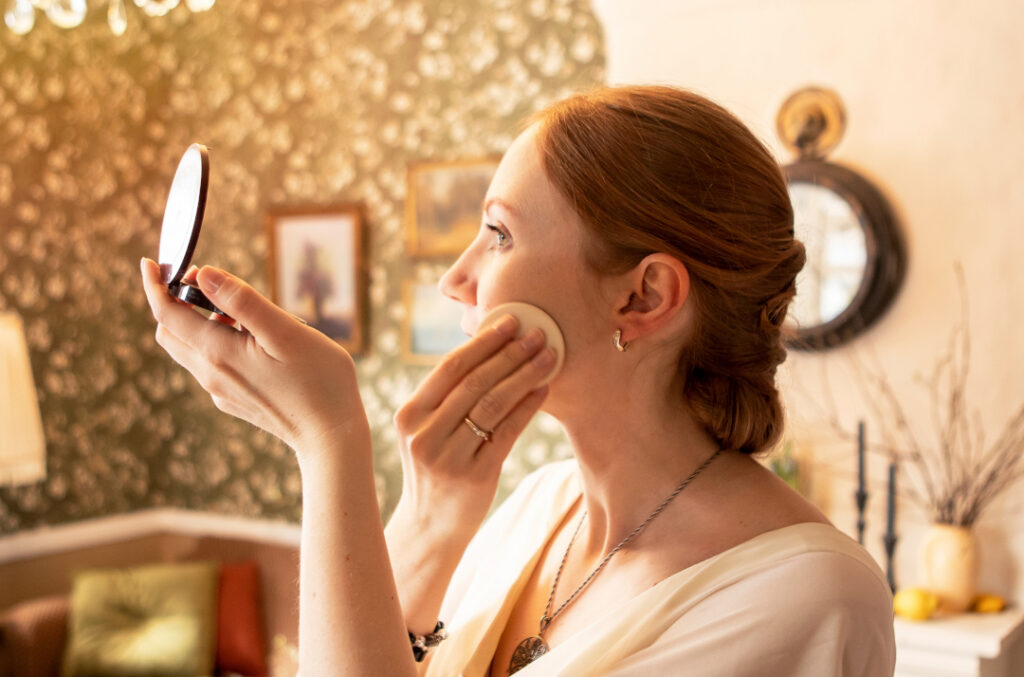
Finding the right foundation shade should not feel like a personality test, but somehow it does.
You walk into a store thinking you need “medium beige” and suddenly there are 60 bottles with names like porcelain sand, golden almond, neutral honey, warm caramel, deep espresso, and soft something.
Helpful? Sometimes.
Overwhelming? Absolutely.
Foundation is supposed to make your skin look smoother, more even, and more polished. It should not look like a mask. It should not stop at your jawline like a bad decision. And it definitely should not turn orange halfway through the day.
The good news is that finding a better foundation match gets easier once you understand two things: skin tone and undertone.
Skin Tone vs. Undertone
Your skin tone is the surface color of your skin.
This is usually described as:
Fair
Light
Medium
Tan
Deep
Dark
Your undertone is the subtle color underneath your skin.
This is where foundation matching gets tricky.
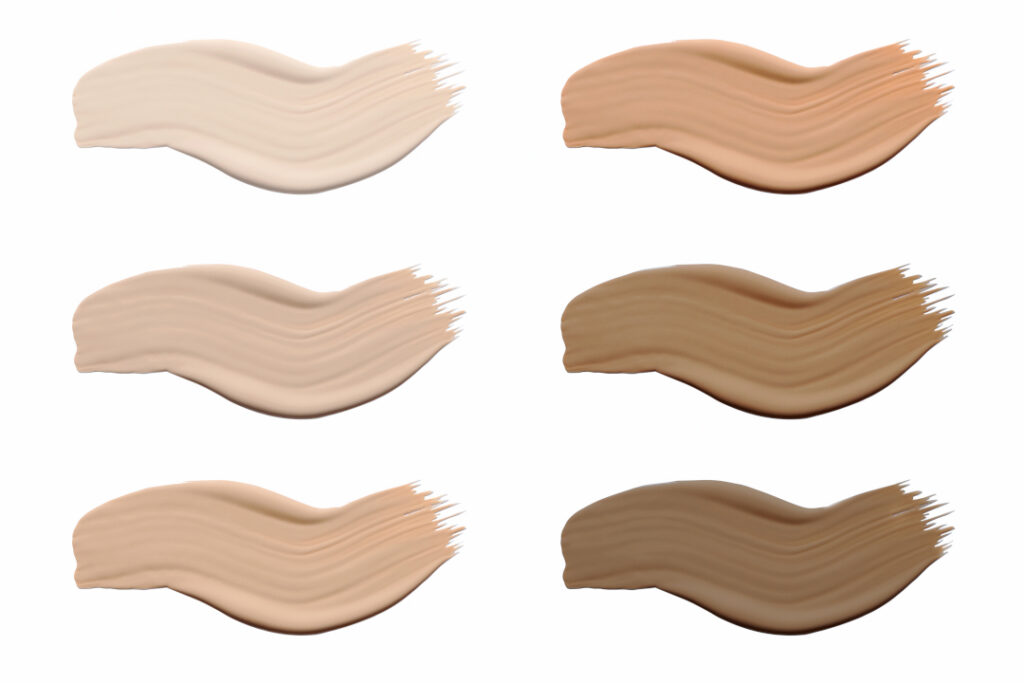
Most undertones fall into one of these categories:
Cool: pink, red, or bluish tones
Warm: yellow, peachy, or golden tones
Neutral: a mix of warm and cool tones
Olive: greenish or muted golden tones
Two people can both have medium skin, but one may need a warm foundation and the other may need neutral or olive.
That is why “close enough” often looks wrong once you leave the store.
How to Figure Out Your Undertone
There are a few simple ways to guess your undertone.
The vein test is one of the most common. Look at the veins on your wrist in natural light. If they look blue or purple, you may have cool undertones. If they look green, you may have warm or olive undertones. If it is hard to tell, you may be neutral.
The jewelry test can help too. If silver jewelry usually looks better on you, you may lean cool. If gold jewelry looks better, you may lean warm. If both look good, you may be neutral.
You can also use the white shirt test. Hold a clean white fabric near your face in natural light. If your skin looks more pink, you may be cool. If it looks more yellow or golden, you may be warm. If your skin looks slightly green, gray, or muted, you may be olive.
None of these tests are perfect.
They are clues.
Not a court ruling.
How to Test Foundation the Right Way
Please do not test foundation on your hand.
Your hand and your face are usually not the same color.
Instead, test foundation along your jawline or lower cheek and blend it slightly toward your neck.
The right shade should disappear into your skin.
Not sit on top.
Not look chalky.
Not look orange.
Not make your neck look like it belongs to someone else.
If possible, test two or three shades side by side.
Then check them in natural light.
Store lighting lies.
Bathroom lighting lies.
Car mirrors are rude, but often honest.
Give the foundation a few minutes before deciding. Some formulas oxidize, which means they can get darker or warmer after sitting on the skin.
A shade that looks perfect immediately may look too orange ten minutes later.
Choose the Right Formula Too
Shade is important, but formula matters just as much.
If your skin is oily, you may prefer a matte, soft matte, or long-wear foundation.
If your skin is dry, you may prefer hydrating, radiant, or serum-style formulas.
If your skin is textured, heavy matte foundations can sometimes emphasize texture. A lighter, buildable formula may look smoother.
If you want everyday makeup, a skin tint or medium-coverage foundation may be enough.
If you need event makeup, photos, or long wear, you may want something with more coverage and better staying power.
The best foundation is not always the fullest coverage.
The best foundation is the one that looks good on your actual skin.
Foundation Should Match Your Face and Neck
A lot of people match foundation only to their face, then wonder why it looks off.
Your face may be lighter, darker, redder, or more uneven than your neck and chest.
The goal is to make everything look connected.
If your face is slightly darker than your neck, match closer to your neck.
If your chest is visible in your outfit, consider that too.
This is especially important for photos because cameras love exposing mismatched foundation.
Very rude. Very common.
Inclusive Shade Ranges Matter
For a long time, foundation shade ranges were embarrassing.
Too many brands acted like everyone existed in five shades of beige.
Thankfully, more beauty brands now offer broader shade ranges with different undertones, especially for very fair, olive, tan, deep, and dark skin tones.
When shopping, look for brands that clearly describe both shade depth and undertone.
A good shade range should not just have more colors.
It should have better undertone options.
Because “deep” is not one color.
“Fair” is not one color.
“Medium” is not one color.
People deserve better than guessing from a bottle that looks vaguely close.
Application Makes a Difference
Even the right shade can look bad if it is applied poorly.
Start with skin prep.
Clean skin.
Moisturizer.
Sunscreen during the day.
Primer if you actually need it.
Then apply foundation in thin layers.
You can always build coverage where you need it.
A damp sponge usually gives a softer, more skin-like finish. A brush can give more coverage. Fingers can work well with skin tints or lightweight formulas.
Do not forget to blend around the jaw, hairline, and nose.
Foundation should look like skin, not evidence.
Glam Staff Take
The right foundation should make people notice your skin, not your foundation.
It should even things out, soften what you want softened, and let the rest of your makeup sit better.
But it should still look like you.
If a foundation makes you look gray, orange, flat, dry, cakey, or like you borrowed someone else’s face, it is not the one.
Keep testing.
The perfect match is annoying to find, but once you find it, your whole makeup routine gets easier.
TL;DR
To choose the right foundation shade, match both your skin tone and undertone.
Test foundation on your jawline, not your hand, and check it in natural light. Let it sit for a few minutes to see if it oxidizes.
Choose a formula based on your skin type, not just the shade.
The best foundation should blend into your face and neck, look natural in real life, and still hold up on camera.